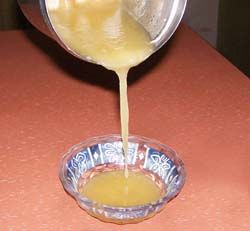
 If ghee means calorie-rich, sinful indulgence to you, you are mistaken. In fact, an ingredient in ghee helps reduce body fat and increases lean muscle mass. As you read further, you’ll realise that ghee has many health benefits contrary to popular belief.
Science says
Modern science has discovered that ghee is rich in antioxidants. The fats in ghee aid absorption of fat-soluble vitamins and minerals from other foods, strengthening the immune system. Ghee is also rich in butyric acid, a fatty acid with anti-viral properties, which is believed to prevent cancers and tumours.
Recent research has also detected presence of linoleic acid in ghee. Linoleic acid retards the growth of some cancers and protects us from heart disease. This acid is often lacking in a vegetarian diet.
According to Ayurveda, ghee made from cow’s milk promotes memory, intellect and digestion. It also promotes healing of wounds, keeps the skin lustrous and maintains immunity.
Although Ayurveda promotes consumption of ghee for a variety of benefits, it also warns the obese to use this frugally.
According to B S Raheja, the ex-director of All India Institute of Diabetes, the present epidemics of diabetes, heart disease and some cancers is due to not including ghee in our diets.
Goodness of ghee
- Ghee is a source of beta carotene and vitamins A, D, E, and K. Beta carotene and vitamin E are vital antioxidants. Vitamin A is naturally present in ghee, which is lacking in other edible oils.
- Ghee has no milk solids, lactose or sugars. These get separated out when the butter is made into ghee.
- Organic ghee has no additives, preservatives, oxidised cholesterol or trans-fatty acids that clog arteries.
- Ghee is highly stable and does not go rancid even at room temperature.
- It has a very high smoke point—it does not burn at high cooking temperatures. Even the Diabetes Association of India highly recommends ghee as a cooking media.
- Ghee is primarily saturated fat. One tablespoon of ghee provides 14g of saturated fat, 28mg of cholesterol and roughly 120 calories.
- Adding ghee to your diet reduces the serum cholesterol levels.
Make it at home
Collect the cream formed on milk over a period of days. When you have collected a substantial quantity, add yogurt culture to the cream to sour it. Pass the sour cream through a blender or shake it in a bottle, till the butter floats. Heat the butter in a heavy-bottomed pan till all the water content bubbles out. Soon, the milk solids start to separate to give golden-coloured ghee. The ghee remains good for a long time without refrigeration.


No comments:
Post a Comment